Garden Tower Review 2020 | Complete Growing System
Green Thumb Gardener occasionally links to products and services offered by vendors to help with your gardening needs. Some are affiliate links — we earn a small commission if items are purchased, at no cost to you. See our affiliate disclosure.


About the Author: Jeremy Starke
I've been growing vegetables since I was 12 — over 30 years in the dirt. I share what actually works in my own Zone 6b garden, and what I wish someone had told me when I started.
Zone 6b · North Carolina · Gardening since age 12Maybe you want to grow more fresh food for your family, but you are challenged with space. Maybe you wanted an easy solution to garden with.
You finally found the Garden Tower 2 and this Garden Tower Review will serve to justify and cement your choice regardless of which gardening system you choose later on.
We give you the scoop to help you make your decision on this garden investment.
Meet The Garden Tower
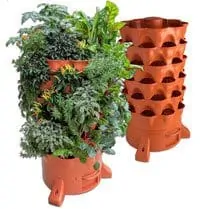
1 | Garden Tower 2: 50-Plant Composting Container Garden
- Plants: 50 or more
- Dimensions: 43" Tall x 24.5" Wide
- Weight: 36 lbs (~220 lbs with moist soil)
The most appropriate product category to discuss here is the Garden Tower 2 shown above which is the latest model but you can access its earlier development history here.
- This Garden Tower 2 category promises growth to a bounty of healthy and fresh vegetables and fruits.
- As the template design model, it possesses all the features of earlier versions that were built before its construction with add-ons to later versions.
- It has been touted as the most brilliant or all previous versions.
- Every level can be rotated a full 360° so that all plants can fall under direct sunlight.
- The tower generates its own compost inside a central tube that contains soil, kitchen scraps and soil. Worms deliver water, air and nutrients to the roots for virile plant growth.
All the compost is channeled through holes perforated on the sides of the tube in the center which provides access to plant roots that are sprawled in front of the advancing compost nutrient material.
Material for the compost building will again be added into the center core hole and be devoured again by worms already in the tube.
The water percolating through the system is also collected and recycled by being poured through the soil at the top level.
A very interesting event from the tube is that liquid material formed by worm activity will also drain into the collecting container at the bottom which enriches the water already collected into rich fertilizer.
Check out this video of how it works:
CHECK CURRENT PRICE: Garden Tower 2: 50-Plant Composting Container Garden
Things to Consider Before Buying A Garden Tower
The Garden Tower project consists of 5 professionally built units each honed to address different issues faced by potential users.
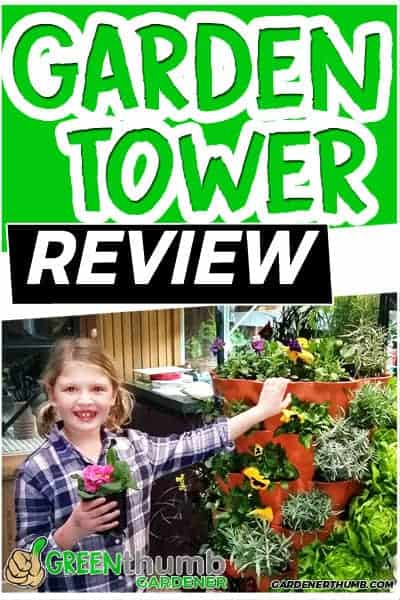
The Garden Tower Project Starter Bundle for instance provides everything that a newbie planter would need.
This is perfect if you are a new starter at planting your own food.
Sunlight is a priority for any growing venture so you need a plant container that’s adjustable & mobile to facilitate exposure of plants to sunlight.
Ingenuity in design enables this container to rotate for plant exposure to sunlight no matter where the sun is in the sky.
Added to this feature is an extremely solid vase for stability and sturdiness that guards against unexpected accidents.
This Tower comes with its own bag of fertilizer from Dr. Earth Plant Food.
It is a completely organic mixture that will boost the growing vitality of your soil and kick start your newly transplanted young plants into life.
You can eliminate the problem of remembering what you planted with the use of labels which can be easily written and erased with changes in your planting intentions.
You’d need a nursery for planting your seeds and allow them to germinate in serene and clean surroundings.
Again this starter category wins hands down with its Jump Start 72 Seed Starting Greenhouse.
The Tower comes with this miniature greenhouse seed planting tray where your seeds can germinate in peace and be transferred to the Tower when they’re ready.
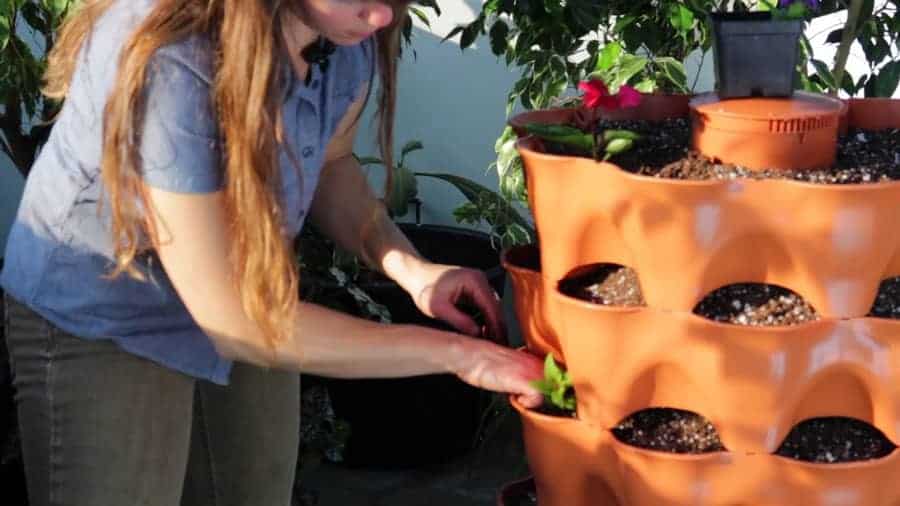
Soil to start your seeds growing fast would be another requirement that needs to be addressed.
Luckily, this planter will also provide you with the right kind of soil to allow your seeds to be planted & germinate.
It quickly transforms from the miniature nursery to the Garden Tower where they can be given proper treatment and care for rapid growth to maturity.
Even more amazing is that for starters you will also be provided with a gift card of the exact type of seeds to propel your planting from the very start.
All these kick start initiatives are bound to spell nothing but success for your planting venture.
Garden Tower's Best Details
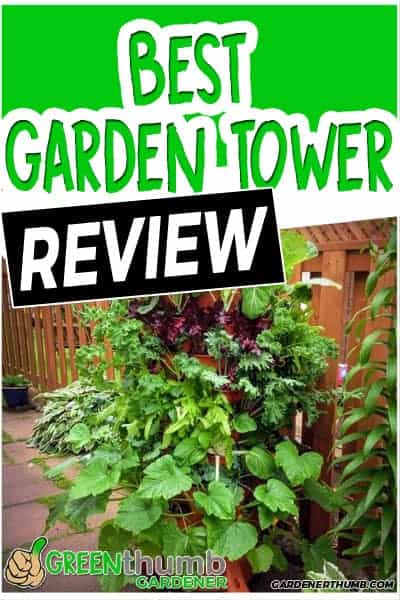
The most difficult and perhaps the most annoying task is maintaining your patch of garden to keep it clean and presentable.
Somehow you believe that the maintenance work you spend.
You know you have to weed, dig, hoe, prune, & transfer seedlings and other tasks.
Does this give you the bounty you hope for?
Maybe or maybe not.
This is not always the case but here is a better way to get a bounty of vegetables and fruits with the Garden Tower Project with lesser time and backaches.
They offer 5 versions of professionally built Garden Tower apparatus for growing as many as 10 of your favorite veggies and fruits not to mention the other 40 which you can also grow at the same time!
And here are the features and benefits that lend weight to my argument to change your gardening style:
Standout Features
Indoor Gardening
One outstanding feature of a garden tower is your ability to locate it indoors. This saves time and effort in moving to and from your plants for watering, depositing scraps and compost material and it also provides décor to your home.
Fitted Wheels
Three widely spaced ball-bearing wheels can be fixed on your tower’s three stands to help relocate the tower to a preferred sport for the good of your plants.
Longevity
Your tower has been constructed to last a minimum of 7 and a maximum of 12 years. This is a very long time to be planting without stopping year in and year out.
Award Winner
Garden Tower Project has been given recognition for the uniqueness of its innovative creation and the design of their product.
Minimal Maintenance
Apart from the inflicting or damage, there is absolutely no need for maintaining the tower once it has been acquired and used during the warranty period
No Weeding Needed
There’s very little chance of weeds developing within the garden tower given the continual attention of filling the compost tube and watering using fresh water or used water that collect in the tray at the bottom of the garden tower.
Fertilizer from Kitchen Scraps
The compost tube located in the center of the garden tower acts as an efficient space for the production of compost from leftover scraps with an addition of some grass clippings the compost material travels down the tube and is delivered to the roots by gravity.
Conditions and Revitalizes Soil
Another great feature of the garden tower is its ability to maintain a steady flow of nutrients to plants.
This comes from the use of compost materials made inside the center tube and the controlled watering to keep water levels at the desired amount.
In doing so it continually reinvigorates the soil.
Accessible & Senior Friendly
Owing a garden tower would be sheer delight for elderly grandpas and grandmas.
At this age, serenity and watching growing plants holds a special attraction for their attention and occupation simply by viewing and perhaps fondling the leaves and fruits here and there. It reminds them of their youth.
Less Watering, Less Nutrient Lost
Growing veggies in a garden tower doesn’t need too much watering. It’s well known that plants sitting in too much water can kill them outright.
Another downside of too much watering washes valuable nutrients before plants can use them which is a waste. So less watering means that nutrients are not wasted.
No Extra Costs Added
You may need electricity for your washing machine and drier but not for your garden tower. It’s fully functional with your manual assistance so you don’t have to worry about paying extra for electricity consumption or anything else.
All you do is assist by providing both fresh and used water and scraps that you don’t need for your compost and let the worms channel the water, air and compost to the roots of your plants.
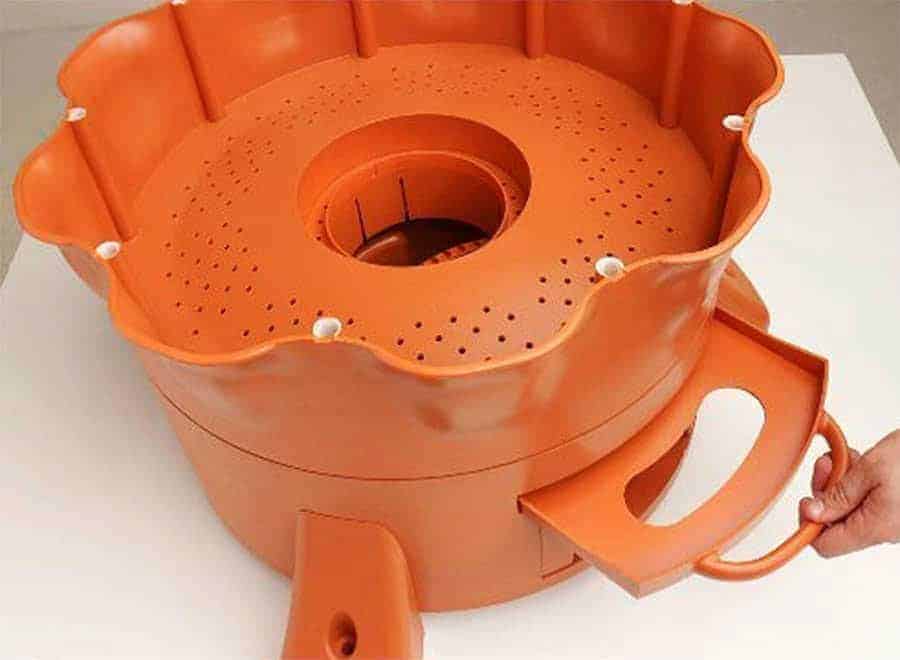
Garden Tower Best Benefits
So what are the benefits of your garden tower?
The list below will give you some idea of how you benefit from this four foot square and four foot tall garden:
Organic Growing
Fresh and succulent veggies grown with organic nutrients like compost and used water that has percolated through compost material is the best sustenance for your vegetable plants which you grow at home.
There is no substitute for organic grown food.
Simple to Assemble
You couldn’t find an easier and more exciting growing container than a garden tower.
It has to be easy given the many videos provided for a DIY assembling task if you actually need them. Garden Tower Project offers these videos on their YouTube channel
Assistance from Other Videos
Other detailed video sets that help you grasp the technique of setting up your tower and how to use it for planting are available.
They show how to actually assemble your vertical planting container, fill it up with soil, the composting process. Nothing is left out.
These complete assembly and use videos are especially beneficial who are new to growing their own veggies and fruits.
Available Space
Availability of space is no issue because your tower only needs a four square area on which to stand and that’s it!
That’s your gardening area four feet square and about 4 feet high. Your patio, verandah will be sufficient space where you can use the 50 growing slots for a sustained supply of vegetables and fruits.
Garden Tower vs Tower Garden (Juice Plus)
Earlier on in this review, it was pointed out that Garden Tower uses soil, water, scraps, and worms placed in the soil which attack both soil and scraps to produce compost.
Instead of these, the Tower Garden uses a substance called rockwool which it claims provides plant roots with oxygen and moisture to promote fast and vibrant plant growth.
A reservoir at the base of the system stores a rich mineral blend with water added as nutrients for plants.
In contrast, the Garden Tower depends solely on the interaction of worms, kitchen scraps and recycled used water for the production of compost as plant nutrient.
For the Tower Garden, the stored nutrients are pumped from the reservoir below into a perforated dish at the top allowing water to cascade down onto the plant roots.
For the Garden Tower, manual watering is supported by gravity as water is poured into the soil at the top level tier. The gravity takes over distributing the water downwards onto the plant roots.
The Garden Tower system automatically repeats the process about every 15 minutes to deliver oxygen, water and nutrients at the needed time to the plants.
The process of delivering nutrients for the Garden Tower is different depending only on the periodic watering, the rate of compost making and the dousing of the roots by the recycled used water collected at the bottom of the system.
Another note worth mentioning is the Garden Tower cost much less than the Tower Garden at the time of writing this.
Garden Tower vs 5 Tier Vertical Garden Planter
Both systems are made of plastic but different types. The “Green Stalk” watering method is used by Tier Vertical Planter which involves using gravity to fill the structure to the top tier.
The need to apply water is indicated by the level of water in the top tier level and as with Garden Tower soil is also used in the Tier Vertical Planter.
Also like the Garden Tower, a variety of vegetables can be grown in it including:
- Vegetables
- Herbs
- Strawberries
- Potatoes
- Lettuce
- Corn
- Tomatoes
- And Much more
The Tier Vertical Planter occupies less space than that occupied by the Garden Tower.
Yet it’s able to grow 90 plants, 40 more than the number grown by the Garden Tower..
There’s no mention of revolving levels for the Tier Vertical Planter, so the Garden Tower wins a point.
Both systems don’t use weeding or tilling, no pests, add color and height to their location. A difference is the Tier Vertical Planter has no dish at the bottom to collect water percolating from the tip tier.
Garden Tower Project v. Aerospring Indoor Hydroponic System
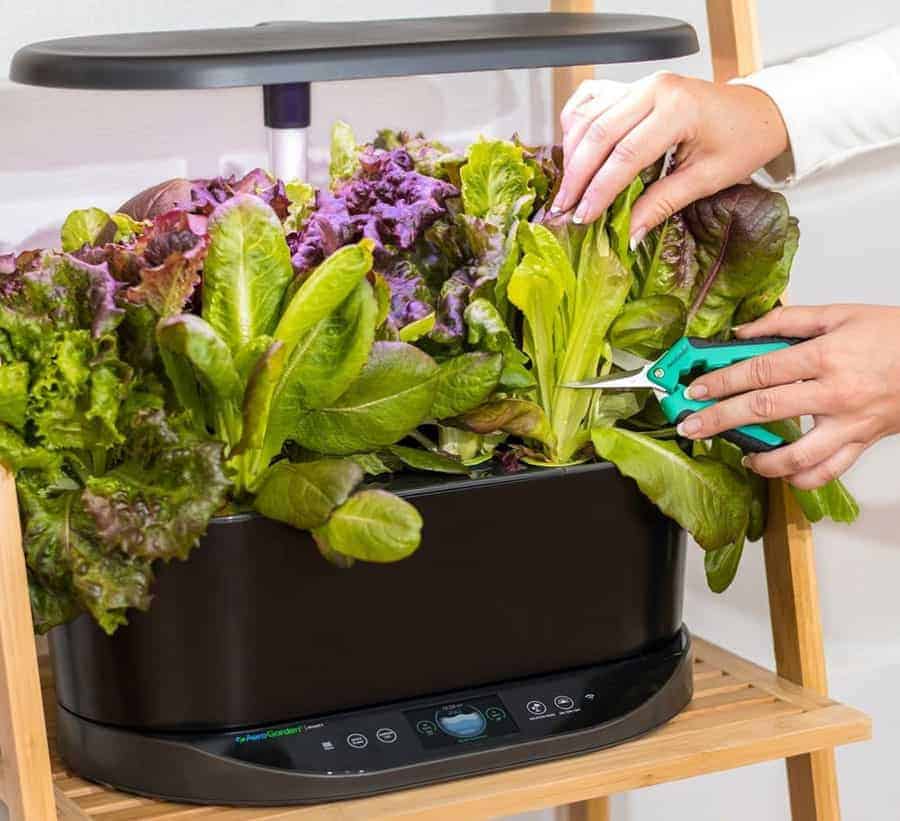
Similar to the Garden Tower, the Aerospring System for indoor planting can grow a variety of 27 edible plants. This is exactly 23 less plants grown in the Garden Tower system.
The Aerospring System actually occupies more space than the Garden Tower requiring an area of 10 square feet. This is compared to the Garden Tower’s 4 square feet of space.
No animal by-products are used for planting in the Aerospring System and while none is used in the Garden Tower system, food scraps and worms are used.
Both systems are environment friendly and both have also been tested as sound outdoor gardening systems.
They both perform as an indoor gardening system with LED grow lights, managed airflow and tents for plants to grow all year round.
Taken overall, the pros and cons of both systems seem to balance out in the end.
However, the Aerospring does have a large upfront cost.
Final Thoughts
The Garden Tower models provide a myriad of solutions to a plethora of issues that have enveloped people in our times.
Thank goodness that they’ve appeared when they are really needed. There’s a lack everywhere you turn, food, space, money, depression, loneliness and so many more that can’t be written but these 5 will suffice for they are at the epicenter.
Food is becoming scarce and Garden Tower can generate freshly grown food virtually non-stop.
Congestion from population growth has slowly squeezed space but for tons of food, Garden Tower 2 only needs 4 square feet of space.
Even without money you can still enjoy freshly grown vegetables and fruits. Colossal don’t you think?
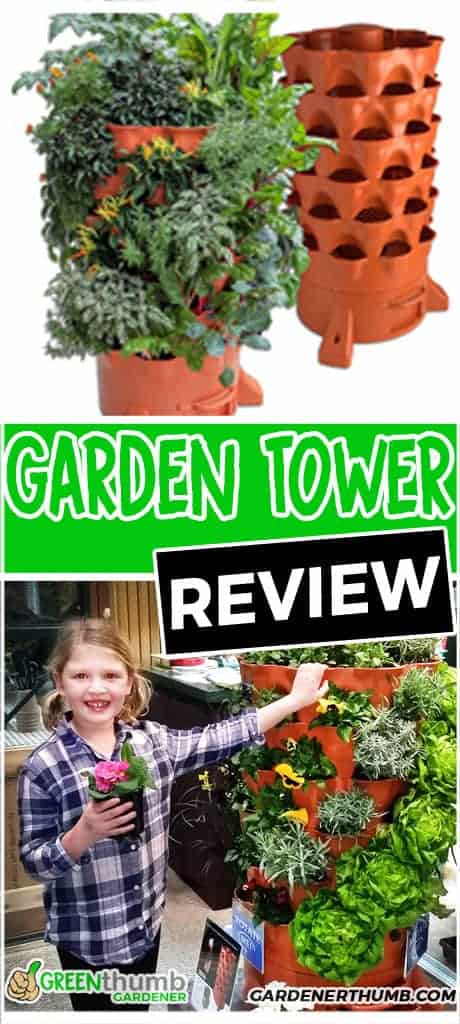
Meet Jeremy Starke
I've been growing vegetables since I was 12 — over 30 years in the dirt. I share what actually works in my own Zone 6b garden, and what I wish someone had told me when I started.
Zone 6b · North Carolina · Gardening since age 12 Read My Story →Frequently Asked Questions
What is the Garden Tower 2?
A vertical container garden that grows up to 50 plants in a 4-square-foot footprint, with a central tube for composting worms that feed the soil.
Is the Garden Tower worth it?
For patios, balconies, and small yards, yes. It packs a lot of growing space into a tiny area and recycles kitchen scraps through the built-in composter.
Garden Tower vs Tower Garden, what's the difference?
The Garden Tower uses soil and a compost core, while the Juice Plus Tower Garden is hydroponic, using water and nutrients. Soil is lower-tech, hydroponic grows faster.