The Best Composter for Your Space: 5 Honest Picks
Green Thumb Gardener occasionally links to products and services offered by vendors to help with your gardening needs. Some are affiliate links — we earn a small commission if items are purchased, at no cost to you. See our affiliate disclosure.

About the Author: Jeremy Starke
I've been growing vegetables since I was 12 — over 30 years in the dirt. I share what actually works in my own Zone 6b garden, and what I wish someone had told me when I started.
Zone 6b · North Carolina · Gardening since age 12The Best Composter for Your Space: 5 Honest Picks
Over the last thirty years, I’ve rotted just about everything you can grow at home, from prize tomatoes to tough zucchini vines. I’ve also wasted a good chunk of change on cheap plastic bins that cracked during their first hard freeze.
If you came here looking for a single “best” composter, I’ve got some bad news. There’s no such thing. The perfect setup for a suburban yard with three massive oak trees will make a third-floor apartment smell like a swamp in a week.
The right pick depends entirely on your space, what you’re tossing in, and how much work you want to do. When you’re starting out, keep in mind that a small, full bin almost always beats a giant, half-empty one.
I’ll walk you through five main setups:
- Outdoor compost bins for big yards.
- Dual-chamber tumblers for easy turning.
- Simple kitchen caddies for countertop collection.
- Electric food recyclers for quick dehydration.
- Indoor worm bins for small apartments.
I’ll give you my honest picks for each style, what they really cost, and exactly where each one will let you down. No fluff, just the dirt.
Here’s the whole roundup at a glance if you just want the bottom line:
| Image | Product | Features | Price |
|---|---|---|---|
BEST OVERALL  | FCMP Outdoor Dual Chamber Tumbling Composter |
| Check Current Price |
BEST BUDGET  | GEOBIN Expandable Compost Bin |
| Check Current Price |
KITCHEN CADDY  | OXO Good Grips Easy-Clean Compost Bin |
| Check Current Price |
BEST ELECTRIC  | FoodCycler Eco 5 |
| Check Current Price |
APARTMENTS 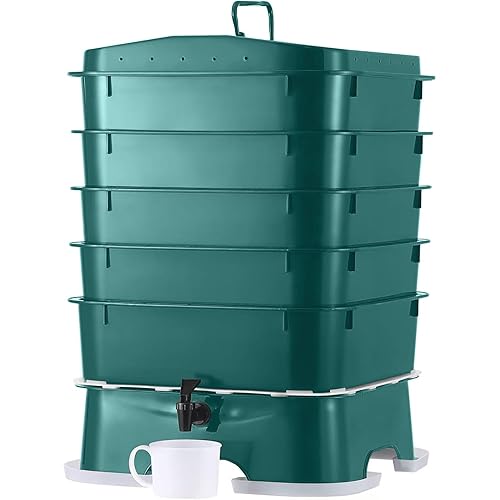 | VermiHut Plus 5-Tray Worm Compost Bin |
| Check Current Price |
First, match the composter to your life (not the other way around)
How do you avoid buying a plastic eyesore that ends up sitting empty in your yard? You match the system to your living situation and what you actually throw away.
Two simple questions decide almost everything: how much outdoor space do you have, and what are you planning to compost? If you only toss in kitchen scraps, you need a completely different setup than someone trying to clear a mountain of autumn leaves.
A packet of squash seeds never leaves my potting bench, but I spent years trying to force a giant, three-bin wooden system to work in a tiny suburban lot before I learned this lesson. You have to be honest about your habits before you spend a dime.
- No yard or apartment: Focus on indoor options. You should route your search toward a kitchen collection caddy paired with a worm bin or an electric recycler. These process daily food waste quickly without attracting fruit flies or creating bad odors in your living space.
- Small yard or patio: Look for a compact 30-to-40 gallon bin or a dual-chamber tumbler. These fit comfortably in a sunny corner, keep pests out, and won’t block your lawnmower path.
- Large suburban property: Choose a large stationary bin or a multi-bin system if you have heavy piles of grass clippings and dry leaves. Capacity matters more than fancy gadgets when you need to swallow seasonal yard waste.
- Speed and efficiency: Prioritize a smaller footprint if you want fast results. A smaller, completely full bin will heat up faster and decompose much quicker than a massive, half-empty pile.
The truth about electric “composters” before you spend $500
If you think buying a high-tech electric countertop machine will give you instant, nutrient-rich soil for your tomato pots, prepare to be disappointed. These popular appliances don’t actually make compost. They’re simply fast, expensive food dehydrators.
“None of the ‘electric kitchen composters’ are composters, they simply dehydrate stuff. The resulting product is not compost.”
(A trained horticulturist, in the comments at The Compost Culture)
These machines use heat and metal blades to dry and grind your kitchen scraps in a few hours. The final product looks like coffee grounds, but it’s still raw food. If you wet it and put it straight onto your houseplants, it’ll mold, rot, and attract flies.
To use this dehydrated material safely in your garden, you have to treat it carefully:
- Bury the grinds at least six inches deep in an empty garden bed so they can break down safely without attracting digging pests.
- Mix them in to a traditional outdoor compost bin where they’ll act as an accelerator for your normal pile.
Keep in mind the ongoing expenses. Beyond the steep initial price, you must budget for replacement carbon filters and electricity costs of roughly $0.50 per month, using about 5 kWh.
I ran a few tests with dried scraps at home. They’re genuinely useful if you live in a high-rise apartment, experience freezing winters, or simply want to reduce your weekly trash volume. Just view them as a great kitchen convenience appliance rather than a magical shortcut to garden gold.
Best for most backyards: a dual-chamber tumbler
My back still aches when I think about turning heavy compost piles with a rusty pitchfork. If you want rich soil without the manual labor, a dual-chamber tumbler is your best bet.
These systems solve the waiting game of single bins, where you must stop adding fresh scraps so the old pile can finish rotting. A dual-chamber setup lets you fill one side while the other cures.
A 37-to-43 gallon capacity is the sweet spot. It builds up enough heat to break down food but remains light enough to spin on its frame. This elevation also keeps pests from chewing their way in.
- No heavy lifting: Spin the drum once or twice a week instead of throwing your back out with a shovel.
- Faster cooking times: The dark plastic absorbs solar heat, breaking down scraps quickly.
- Solid pest defense: The elevated frame keeps mice, rats, and raccoons completely out of your kitchen scraps.
Skip these if you compost massive piles of autumn leaves; you will run out of room instantly. Also, avoid cheap models that let rainwater in. I once bought a bargain bin that leaked, turning my compost into a smelly, anaerobic (oxygen-deprived) slime. Too much water will slow decomposition to a crawl.
If you want to go this route, the FCMP 37-gallon tumbler costs about $88 and is a Home Depot best-seller with a 4.4-star rating. Another reliable option is the VEVOR 43-gallon model, which runs about $67 and carries a similar 4.4-star rating.
- Dual chambers — fill one while the other cures
- 37-gallon sweet-spot capacity
- Elevated frame keeps rodents out
FCMP Outdoor Dual Chamber Tumbling Composter
An easy-to-spin, durable tumbler that keeps pests out and finishes compost fast. A big-box best-seller, and the pick I would hand most backyard gardeners without hesitation.
Pros
- No heavy lifting — spin the drum, skip the pitchfork
- Dark plastic traps solar heat and cooks scraps faster
- Sealed and elevated — solid pest defense
Cons
- Too small for big autumn leaf piles
- Bargain clones leak rainwater — buy the real one
Best budget outdoor bin: GEOBIN
If you have a large yard, a plastic hoop bin is the cheapest way to corral massive piles of waste. The GEOBIN is a simple, expandable plastic circle that gives you maximum volume for the lowest price.
A roll of this plastic mesh landed on my porch five years ago to handle my autumn leaf avalanche. It costs about $40 and adjusts up to 246 gallons, making it a brilliant, budget-friendly solution.
- Massive holding capacity: It easily expands to hold huge loads of leaves, grass clippings, and spent tomato vines.
- Assembles in minutes: You just unroll the plastic, set your desired diameter, and secure it with the included keys.
- Low cost: At roughly $40, it is the cheapest way to start a serious backyard pile.
Skip this bin if you want a tidy, hidden setup or fast, hot compost. It’s a rugged workhorse, not a backyard centerpiece, and the open-air design means it dries out quickly in hot weather. It also offers zero protection against pests if you toss in kitchen scraps. Keep it strictly for yard clippings and leaves.
GEOBIN Expandable Compost Bin
An affordable, highly expandable open-air hoop bin that swallows autumn leaf avalanches whole. The cheapest way to corral a serious backyard pile.
Pros
- Massive capacity for the lowest price here
- Unroll, clip, done — minutes to assemble
- Perfect for leaves, clippings and spent vines
Cons
- Open-air — zero pest protection for food scraps
- Dries out quickly in hot weather
- A workhorse, not a backyard centerpiece
Best kitchen caddy: OXO Good Grips Easy-Clean
A leaky plastic tub sat on my kitchen counter for years until my family revolted against the smell. I finally bought the OXO Good Grips Easy-Clean caddy. Keep in mind, this caddy only collects scraps; it does not make compost.
- Always-open lid: The lid flips back and stays open so you can scrape cutting boards at top speed.
- Easy to rinse: The smooth interior walls have no hidden corners, meaning a quick spray of water cleans out onion skins.
- No filter replacement: You don’t have to buy pricey replacement filters because this unit relies on a snug lid rather than charcoal.
At about $25 to $38, it saves you from daily trips to your backyard pile.
Because it lacks a charcoal filter, this best-value caddy isn’t for long-term storage. You must empty more often during summer to keep fruit flies away. Skip it if you want zero countertop odor and only empty once a week; you’ll need a bin with a charcoal filter instead.
- 1.75-gallon countertop size
- Stay-open flip lid for fast scraping
- Smooth walls rinse clean in seconds
OXO Good Grips Easy-Clean Compost Bin
The countertop caddy that ended my family’s smell revolt. It collects daily kitchen scraps between trips to the pile — remember, it does not make compost itself.
Pros
- Lid flips back and stays open while you scrape
- No charcoal filters to keep buying
- Rinses clean — no hidden corners
Cons
- No filter means emptying often in summer
- Collection only — pair it with a real composter
Best electric recycler (if you want the appliance): FoodCycler / Reencle
If you live in a tight apartment or face freezing winters, an indoor electric recycler keeps food scraps out of the trash without the smell. These plug-in appliances don’t actually make traditional compost overnight, but they are a lifesaver for small spaces.
Last winter I watched my neighbor use one when our outdoor piles were frozen solid. While they are convenient, you must understand what you are actually buying before spending your hard-earned cash.
- FoodCycler Eco 5: The Vitamix FC-50 — the top electric pick of the last few years — has been discontinued; the Eco 5 is its direct successor from the same FoodCycler line, in the same $300-to-$400 range. It quickly dehydrates and grinds food scraps into dry powder, though you must still cure the dry output in soil.
- Reencle Prime Microbe: This microbe-based system costs about $499 and uses quiet fermentation to create a ready-to-use output. It has a 4.6-star rating and doesn’t need daily emptying.
- What about the Lomi? The most heavily advertised machine in this category is a dehydrate-and-grind appliance like the FoodCycler, not a true composter. Treat its “dirt” the same way: cure it in soil before it goes anywhere near your plants.
Both machines do a fantastic job of cutting kitchen waste and eliminating odors. Neither one will replace a real, living compost pile.
Skip these expensive appliances if you have any outdoor yard space and a bit of patience. A simple $40 plastic bin will outperform a $500 machine every single time when it comes to making actual, nutrient-rich dirt.
- Dehydrates + grinds scraps in hours
- 5-liter bucket, odorless operation
- Countertop footprint for apartments
FoodCycler Eco 5 (successor to the Vitamix FC-50)
The FC-50 that made every roundup has been discontinued — the Eco 5 is its direct successor from the same FoodCycler line. It dehydrates and grinds scraps into a dry powder. That output still needs to cure in soil; it is not finished compost.
Pros
- Keeps scraps out of the trash in tight apartments
- Works when outdoor piles are frozen solid
- Odorless, quiet countertop operation
Cons
- Appliance pricing for a dehydrator
- Output is NOT compost — it must cure in soil
- Ongoing filter and electricity costs
Best for apartments and no yard: a worm bin (VermiHut Plus)
A few years back, I set up a small worm bin in my basement because I wanted to recycle kitchen scraps without walking out to a snowy yard. The VermiHut Plus is my top choice for indoor spaces because it uses a vertical tray system to turn food scraps into rich worm castings.
Make sure you understand that these bins produce castings, not compost. These nutrient-rich castings are incredibly powerful, but they are too strong for seeds if you try to plant directly in them.
In my experience, these systems run around $60 to $150 and fit easily in a closet or corner.
- Stacking tray system: Worms migrate upward through the grates as they finish eating, leaving clean castings behind.
- Excellent air circulation: The airflow and stacking design keeps the bedding oxygenated so it never smells like rotting garbage.
- Ant-guard legs: Special plastic cups on the legs can be filled with water to keep pests from crawling inside.
Because of its thin plastic walls, this bin has zero insulation. You must keep it sheltered in a temperature-controlled area like a garage or basement.
Skip this option if you can’t commit to keeping the bedding moist and out of the direct sun. Forgetting to water them or leaving the bin on a hot balcony leads to cooked worms, and that’s a very sad afternoon.
- 5 stacking trays — worms migrate up as they finish
- Ant-guard legs keep pests out
- Closet-sized indoor footprint
VermiHut Plus 5-Tray Worm Compost Bin
My top indoor pick: worms migrate upward through stacking trays, leaving rich castings behind. True composting with a minimal footprint — it lives happily in a basement corner.
Pros
- Real composting indoors, year-round
- No smell when the bedding is kept right
- Castings are potent plant food
Cons
- Zero insulation — needs a temperature-controlled spot
- Bedding needs regular moisture upkeep
- Castings too strong to plant seeds in directly
How I’d Choose and the Composting Mistakes I’d Save You From
After thirty years of rotting kitchen scraps, I’ve learned that the absolute best composter is simply the one you will actually use. If a bin is too hard to turn or too far away, it becomes an expensive lawn ornament.
The Quick Dirt
- For tight apartments: Pair a countertop caddy with an indoor worm bin.
- For small yards: Choose a dual-chamber tumbler to keep things neat.
- For big yards: Go with a GEOBIN or a multi-bin wooden system.
My garden has hosted every composting mistake in the book. One spring, I bought a cheap plastic tumbler that pooled rainwater inside, turning my kitchen scraps into a slimy soup. Another year, I tucked a bin way out in the back corner of my yard, only to stop feeding it because I hated walking through the snow. I even baked a thriving worm bin to death by leaving it in the July sun on my porch.
To find your match, follow these three steps:
- Assess your space: If you have no yard, stick to indoor options that won’t smell.
- Measure your waste: Remember that a small, full bin beats a giant, half-empty one.
- Place the bin: Keep it close to your back door so you will actually use it in January.
Sources
- Compost Magazine, “Choosing the Right Size Composter for Your Garden”
- The Spruce Eats, “The Best Compost Bins for the Kitchen”
- The Spruce, “Reencle Home Composter Review”
- The Compost Culture, “Reencle Microbe-Based Indoor Composter”
- Compost Magazine, “Worm Composting Guide”
- Compost Magazine, “Composting Myths and Timelines”
- Compost Magazine, “Pest Control in the Garden”
Meet Jeremy Starke
I've been growing vegetables since I was 12 — over 30 years in the dirt. I share what actually works in my own Zone 6b garden, and what I wish someone had told me when I started.
Zone 6b · North Carolina · Gardening since age 12 Read My Story →Frequently Asked Questions
Do I need a composter, or can I just pile it?
A simple open pile works fine. But a manufactured bin keeps your yard neat, traps heat to speed up rotting, and keeps pests out. If you have close neighbors, a tidy bin keeps the peace.
Do electric composters make real compost?
No. These indoor appliances only dehydrate and grind food waste. The dry output will mold if it gets wet, so you still need to bury it or add it to an outdoor pile to cure first.
Is a tumbler really faster?
Only compared to a neglected pile. In my garden a well-turned open pile breaks down waste just as fast as any plastic tumbler. Tumblers mainly save your back.
Which composter won't attract rats?
A sealed tumbler raised off the ground is your best defense. Open piles with bread, meat, or sweet scraps invite pests, so keep those foods out of open backyard piles.
What's the cheapest thing that works?
A DIY bin from free wooden pallets or wire fencing costs nothing and works well. For a cleaner manufactured look on a budget, a plastic wrap-around bin like the GEOBIN is tough to beat.